
Vehicle-Fitment E-commerce: Why Part-to-Vehicle Compatibility Is a Magento Project in Its Own Right
Selling parts that have to fit a specific vehicle isn’t like any other kind of e-commerce.
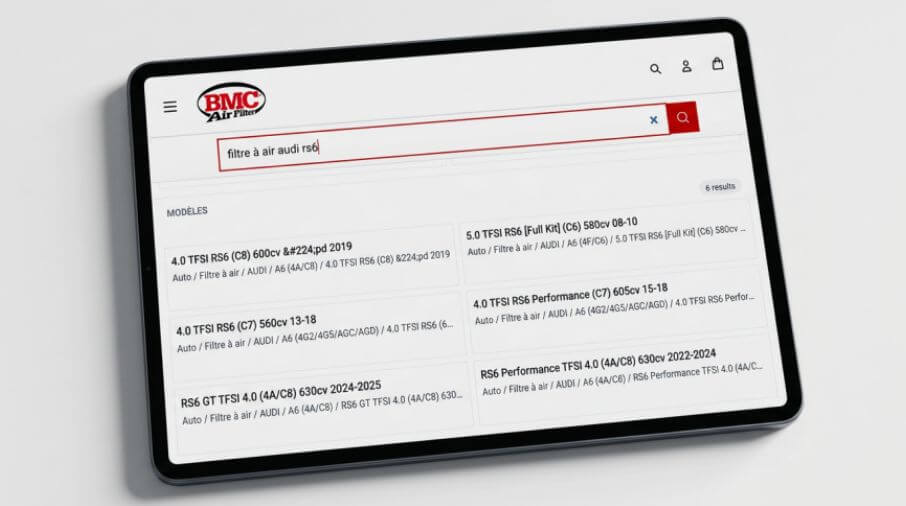
E-commerce unlike any other
Selling parts that have to fit a specific vehicle isn’t like any other kind of e-commerce. A fashion catalogue is filtered by size and colour; a parts catalogue is filtered by make, model, year and engine, and a fitment error doesn’t cost an exchange — it costs a return, after-sales handling, a negative review and a lost customer. It’s a specific technical problem, and it’s precisely where WiMakeIT specialises.
Vehicle fitment is first and foremost a data problem
A vehicle-fitment catalogue is built on a matrix: each part number is linked to a list — often a long one — of compatible vehicles. When that matrix runs to tens of thousands of entries, the challenge is no longer the display but structuring, normalising and maintaining the data.
Misspelled makes, duplicate models, engines described in ten different ways, products without barcodes: without rigorous normalisation upstream, no vehicle selector works properly. We handle this foundation with proven normalisation methods (token matching, deduplication, consistency checks) before we even start talking about the interface.
On Magento: definitely not standard EAV
On Magento, vehicle compatibility should not be modelled with standard EAV attributes — it’s a common mistake and the surest way to degrade performance. A part-vehicle relationship is inherently a many-to-many mapping covering tens of thousands of entries, and it requires a dedicated vehicle storage structure. There are two main approaches, and the right choice depends on the project:
- Dedicated compatibility tables and entities — a custom relational structure with vehicle entities and a link table between parts and vehicles. Flexible and fast when the matrix is large and queried in detail.
- A parallel category structure — dedicated to vehicle makes, models and versions, relying on native Magento mechanisms. Often simpler to maintain and to integrate into the navigation journey.
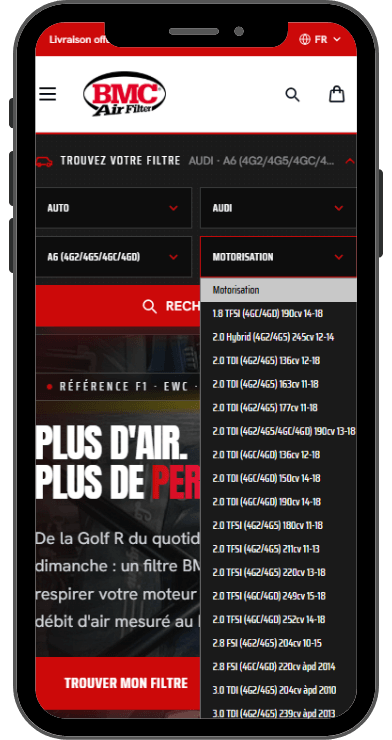
Knowing which one to choose, based on the number of products, how often data is updated and the target sales channels, is part of what we bring. Our FiltreAirBMC store, which links tens of thousands of vehicles to its range of air filters, is built on exactly this kind of compatibility architecture.
ERP synchronisation holds it all together
Stock, prices, new products, compatibility matrices: all of this lives in an ERP (Mercator, Odoo, SAP, Dynamics and others) and has to be reflected on the store in good time. Integrating business systems with Magento has been WiMakeIT’s core business for years, so that the online catalogue is always an accurate reflection of commercial reality.
Multichannel multiplies the requirements
Selling a vehicle-fitment catalogue on your own sites is one thing; distributing it on channels such as eBay (with its native compatibility management via ePID) is another. Every channel has its own rules for structuring vehicle data. We design distribution pipelines that carry compatibility information correctly from end to end, rather than pushing out a raw catalogue that generates errors and returns.
SEO follows its own logic
When a part fits dozens or hundreds of vehicles, the question is no longer “how do I index part XXX” but “how do I capture searches for part XXX for vehicle YYY”. And that is almost always how people search: they don’t type a part number, they type a need linked to their vehicle. Indexing only the raw product page means missing most of the qualified traffic.
This calls for upfront thinking about generated pages, URLs, meta tags and internal linking: should you create dedicated pages for each part-vehicle pair, use the compatibility selector to produce indexable entry points, or weigh coverage against the risk of large-scale duplicate content? These choices directly determine the catalogue’s visibility and deserve as much care as the data structure itself.
B2C and B2B alike
A reseller ordering in volume and a private customer looking for a part for their motorcycle don’t follow the same journey, but both need reliable vehicle fitment. We design both experiences on the same well-managed data foundation.
A large catalogue of vehicle-specific parts?
Car, motorcycle, or any market where product-vehicle fitment drives the sale. Our team in Presles (Wallonia) understands this problem in all its technical depth — 30 minutes free to talk it through.
Book a call →Demo store: FiltreAirBMC — vehicle compatibility selector on a range of air filters linked to tens of thousands of vehicles.
Published 2 Jul 2026
A question about this article?
30 minutes, no strings attached, with a senior technical contact.
Also worth reading
Other articles

Why choose a hybrid B2B/B2C platform
Selling to both businesses and consumers: the challenges of a hybrid model, what Magento brings and how WiMakeIT can…

Artificial Intelligence
Become more efficient by bringing artificial intelligence into your business and your website.
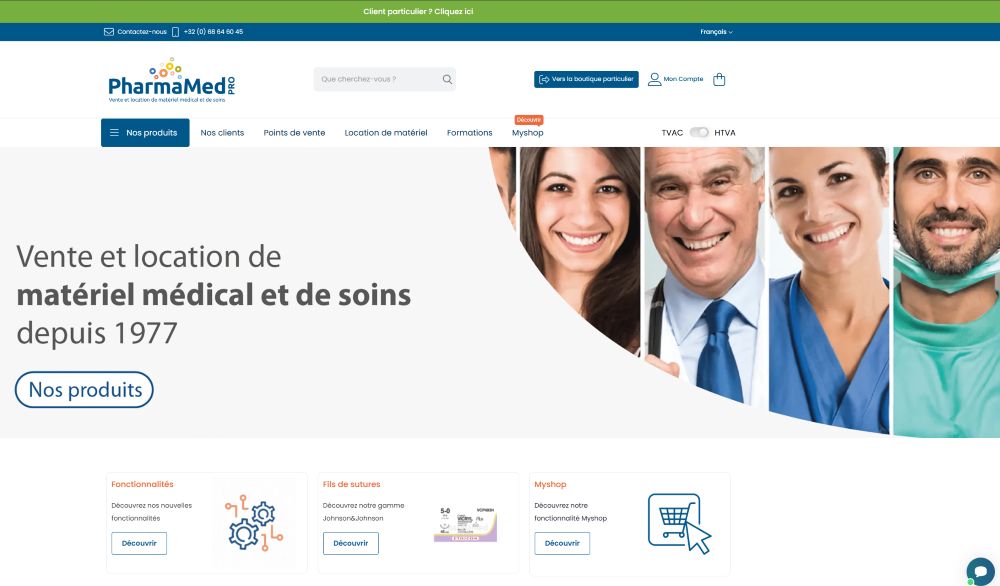
PharmaMed — 25,000 products, 3 audiences, 1 platform
A digital procurement tool. Not just a webshop. PharmaMed has been supporting healthcare professionals in their medical…