
AI and e-commerce: how artificial intelligence is really changing the game for Magento sites
Faster builds, smarter search, content at scale, personalisation: where AI really adds value for Magento sites, and where to be wary.
For e-commerce sites built on Magento, recent advances in AI open up very concrete opportunities: time savings, lower costs, better conversion and more relevant content.
The key is knowing where AI really adds value… and where it still needs to be handled with care.
1. Cutting costs and speeding up go-live with AI
Building an e-commerce site is a complex project: infrastructure, modular architecture, compatibility between extensions, ERP integrations and so on.
AI does not replace developers, but it speeds up certain low-value tasks:
-
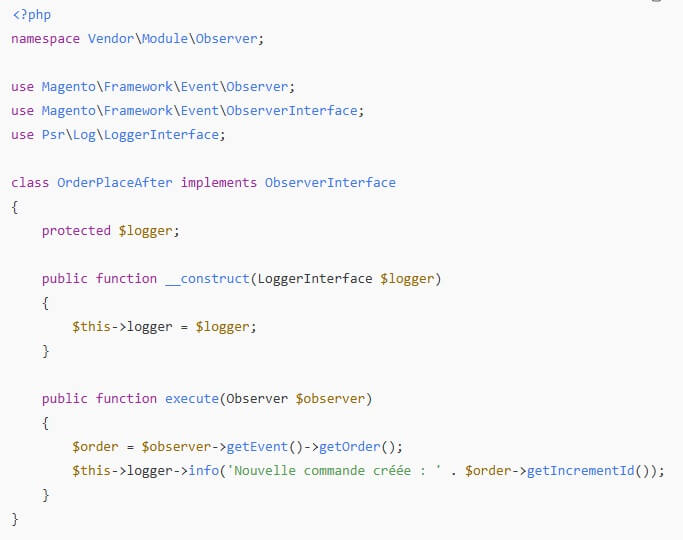
Generating boilerplate code (class, block or observer skeletons).
-
Helping to detect extension conflicts or common coding errors.
-
Producing HTML/CSS templates faster from prompts.
-
Writing technical documentation automatically.
The result: developers can focus on the business logic and deliver a site faster, without piling up billable hours.
With IT budgets under pressure, a faster “time to market” is a strategic advantage for e-commerce SMEs.
2. Smarter search and navigation
On-site search is often the “poor relation” of e-commerce sites, yet it has a direct impact on conversion.
With AI, it becomes able to understand what the shopper actually wants — even when they do not type the right keywords.
Some concrete examples:
-
A shopper types “dry skin cream winter”: the search engine understands they are looking for a rich moisturising cream suited to cold weather, and suggests products from the “nourishing” range rather than light-textured skincare.
-
AI can also correct typos, suggest synonyms and analyse frequent searches to improve the catalogue.
AI-based semantic solutions (such as Klevu, Algolia NeuralSearch or Elasticsearch enhanced with an LLM) make navigation feel more natural and fluid.
The payoff: fewer wasted clicks, more relevant results and, often, more conversions.
3. Creating e-commerce content faster without sacrificing quality
Content creation remains one of the biggest drains on an online retailer’s time:
product pages, category pages, meta descriptions, buying guides and more.
AI tools are changing the game — provided they are supervised and structured.
WiMakeIT can supply turnkey tools that enable its clients to:
-
Generate SEO-friendly product descriptions from technical data.
-
Keep a consistent brand voice with pre-configured agents.
-
Translate product pages automatically into several languages without losing the meaning.
-
Create FAQs or structured snippets to strengthen semantic SEO.
At Wimakeit, we have in fact developed a unique in-house tool built on several specialised AI agents: it automatically generates product descriptions from EAN codes, while respecting the brand’s tone and the business logic of the catalogue.
But the key is still human review: checking the wording, adapting it to the trade, working in the right keywords and adding what sets you apart.
In other words: AI delivers the volume, people deliver the value.
4. Personalisation and automated marketing
By connecting Magento to AI-powered marketing tools (such as Klaviyo, HubSpot or in-house modules), you can:
-
Automatically segment customers based on their behaviour.
-
Tailor emails or product recommendations in real time.
-
Predict the risk of cart abandonment or the best offers to put forward.
AI therefore makes it possible to automate part of your marketing without tipping into artificial over-personalisation.
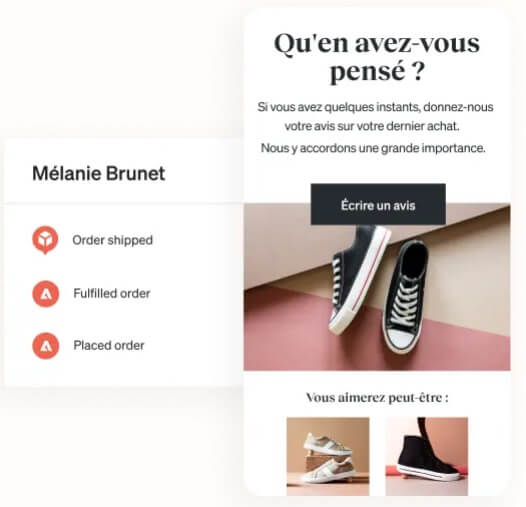
The goal is not to send more emails, but to send the right message at the right time.
5. More responsive customer support that stays human
Here again, AI assistants do not replace teams; they support them.
A chatbot connected to the Magento database can:
-
Answer simple questions (availability, compatibility, lead times).
-
Guide customers as they search for products.
-
Summarise past conversations so that a human adviser can pick up the thread.
Teams save time and customers get an immediate answer — without the relationship losing its authenticity.
6. Staying in control: people remain the conductor
AI is neither magic nor autonomous.
It works fast, but it is not always right.
The web agency’s role is therefore to integrate AI with method and common sense:
-
choosing the right tools,
-
putting safeguards in place,
-
keeping the site technically and editorially consistent.
At Wimakeit, we see AI not as an end in itself but as a lever for efficiency that serves teams and e-commerce performance.
It is this pragmatic approach that gets the best out of it — without drifting or losing control.
Conclusion
Artificial intelligence is profoundly changing the way e-commerce sites are built and run.
But its real value does not lie in full automation: it lies in the way human and machine intelligence complement each other.
Well integrated, AI can cut costs, improve the customer experience and boost performance… while leaving people the most strategic part: the vision.
Contact us for a free, tailored analysis.
Published 28 Oct 2025
A question about this article?
30 minutes, no strings attached, with a senior technical contact.
Also worth reading
Other articles

Hyper-personalisation in e-commerce: the 2026 trend Magento makes possible at scale
Why Librairie Molière bet on personalisation at scale across 2 million products on Magento, and what the figures…

WiMakeIT radically improves Magento2 search
Results in milliseconds on huge catalogues, lighter servers and easy tuning: WiMakeIT’s new search engine for Magento2.

Beauty Parfumerie: a Magento redesign for first-class beauty e-commerce
Beauty Parfumerie’s new Magento site: intuitive navigation, advanced search, a store locator and a built-in beauty blog.