
Forget impulsive launches: e-commerce sites need real integration
Our June 2022 Trends article in full: why an online store only performs when it is connected to your ERP and in-house tools.

Full version of the article published in the “digital transformation” supplement of Trends in June 2022.
1. Did COVID push every business to take the plunge?
The companies that best limited the damage, or even grew their turnover, were those that were already well established online.
Unfortunately, a high-performing e-commerce site cannot be built in a few weeks: launching an online store has to be the outcome of careful thought, a strategy, competitor analysis and so on. If the only goal is to sell the odd item now and then, the seller is better off offering it on social media (e.g. Facebook) or on a marketplace such as Amazon or eBay.
2. The e-commerce tool is still too often the poor relation of the client’s IT system.
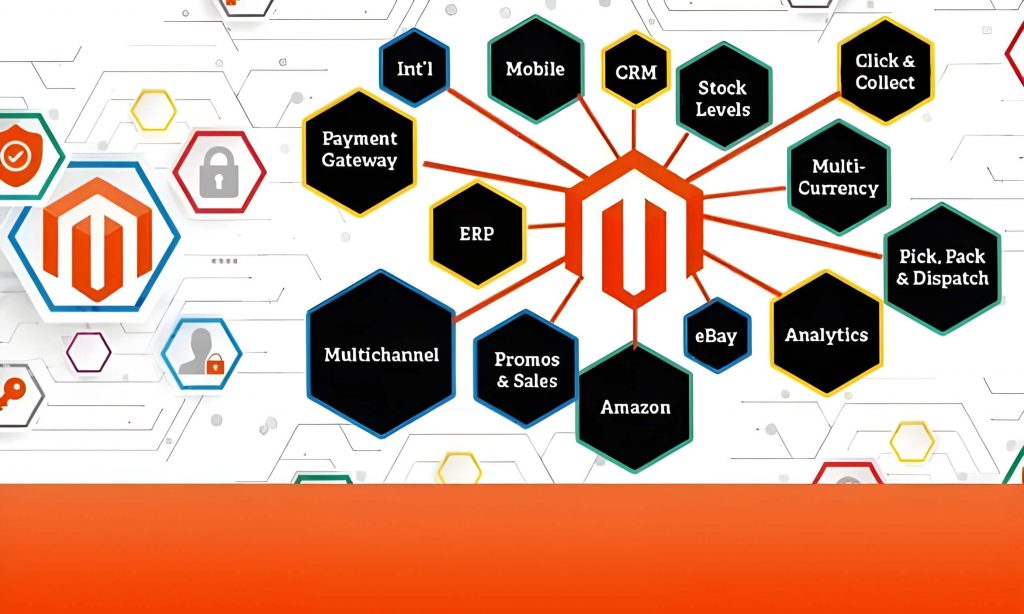
To succeed in online sales, you need to be efficient. And an e-commerce site can only be efficient if it is integrated with the other systems the retailer may already have in place (ERP, accounting, newsletter tool, till and stock management, …)!
Today, we have to admit that many of our clients want to launch an online store without factoring in what they stand to gain by connecting it to all the tools they already use internally.

Our team naturally looks at each client’s situation and whether such an integration makes sense. For example, we have fully automated some websites, such as www.kitcross.com: products are imported automatically from the retailer’s ERP, stock levels update in real time, no order data has to be entered by hand, and so on. In short, this client saves a considerable amount of time running the business, for instance by no longer keying the same data into several different systems. What is more, the initial investment this client made to connect its ERP to its website paid for itself in just one year!
3. Which sales channel should you use?
There are several ways to sell online, mainly social media (Facebook), marketplaces (Amazon) and e-commerce websites.
Retailers tend to start with the first two, because they require very little investment and give them a first experience of selling online.
 Established online sellers, however, use these two channels only as a secondary way to draw in visitors or give their sales a modest boost. They focus most of their efforts on running their own e-commerce site efficiently.
Besides transaction fees that are much lower than on marketplaces, building or improving your own website above all raises your profile and credibility, and lets you stand out from your competitors by showcasing your work, offering specific tools or tailoring the user experience to your industry.
4. Tools that are sometimes out of step with business needs
When a company decides to start selling online, several questions arise: custom development, choice of software vendor, buying the future e-commerce site or renting it monthly. Retailers are offered a wide range of solutions (Wix, Shopify, WooCommerce, PrestaShop, Magento, …), and businesses new to online selling do not always find it easy to work out which one best fits their needs and goals.
We also meet many new clients who already run an e-commerce site with substantial turnover, but who realise after a while that they are held back by the technical choices made at the outset. To avoid these limits on performance and features, WiMakeIT works exclusively with Magento (which allows custom development and offers countless modules), available not only as a licensed edition but also as an open-source edition (i.e. free to use, with no licence fees).
5. Magento: why, and for whom?
Used by major brands such as Nike, Nespresso, Coca-Cola, Ford and Louboutin, Magento is the world leader in e-commerce solutions.
Highly powerful, Magento makes it easy to synchronise catalogues of tens of thousands of products and offers, among other things, a wide range of APIs to connect to third-party systems (ERP, CRM, etc.) and fit efficiently into the company’s IT ecosystem.
Because Magento is used all over the world, Magento agencies are constantly developing and selling a huge number of extensions. So when a client with a Magento website wants to add a feature, it is already available on the market: a considerable gain for the client, who can use the extension straight away instead of paying for custom development, which is always more expensive.
As a widely used, standard open-source solution, Magento is also a safe choice, because the client is dependent neither on the web agency nor on the software vendor’s commercial policy.
The WiMakeIT team builds Magento e-commerce sites for large companies and for sole traders with barely ten products alike, in every sector (fashion, mechanics, pharmaceuticals, metalworking, DIY, etc.). So the client’s size is not what decides the choice of Magento; what matters is its specific short- and/or long-term needs and its plans for connecting systems.
Published 2 Aug 2022
A question about this article?
30 minutes, no strings attached, with a senior technical contact.
Also worth reading
Other articles
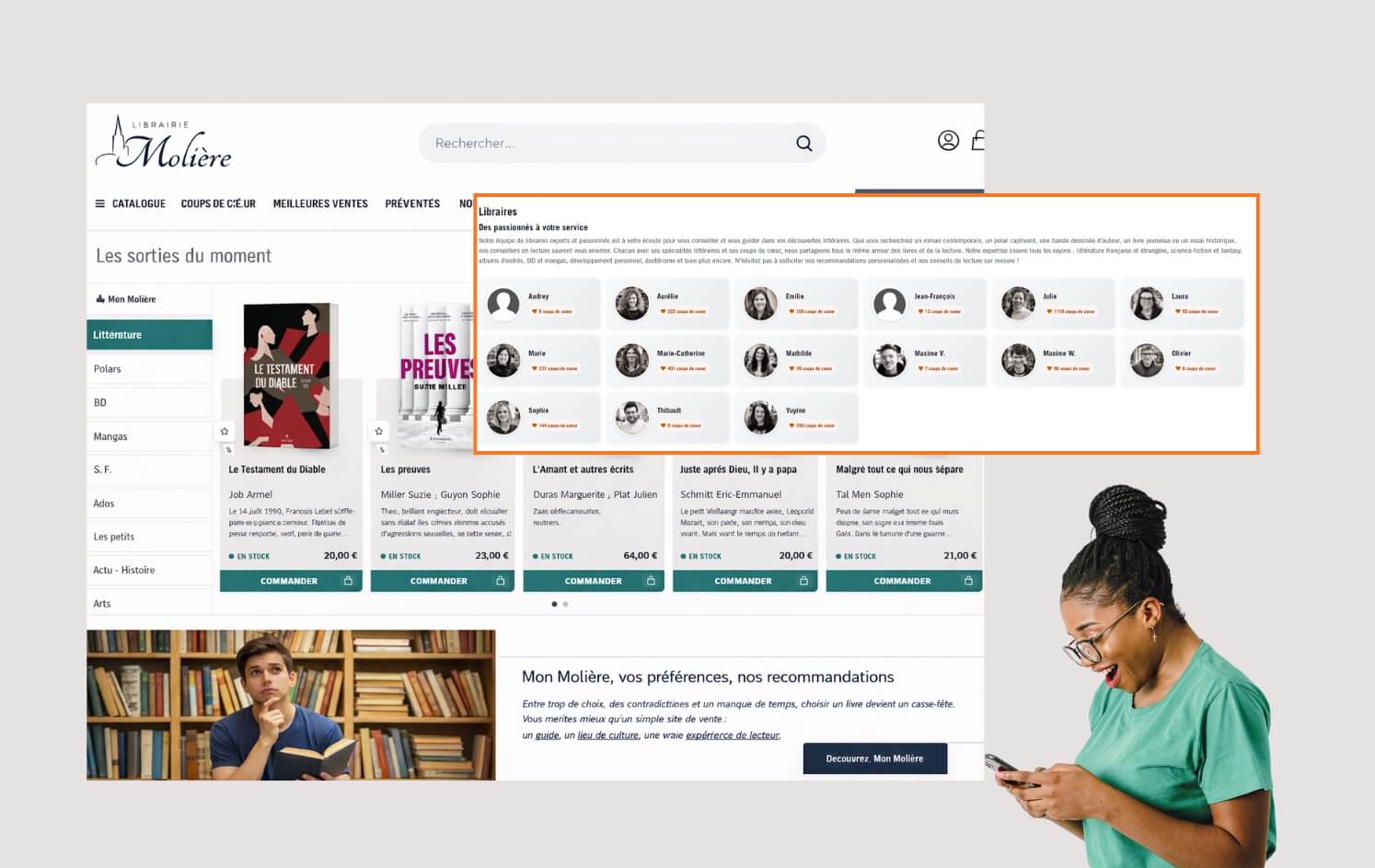
Hyper-personalisation in e-commerce: the 2026 trend Magento makes possible at scale
Why Librairie Molière bet on personalisation at scale across 2 million products on Magento, and what the figures…

WiMakeIT radically improves Magento2 search
Results in milliseconds on huge catalogues, lighter servers and easy tuning: WiMakeIT’s new search engine for Magento2.
AI and e-commerce: how artificial intelligence is really changing the game for Magento sites
Faster builds, smarter search, content at scale, personalisation: where AI really adds value for Magento sites, and…